



As epoxy resins become increasingly integral to sectors such as manufacturing, composites, and electronics, the selection of an appropriate epoxy curing agent is paramount to achieving optimal product performance and reliability. Given the wide range of curing agents available in the market, procurement professionals face challenges in identifying the best fit for their specific applications.
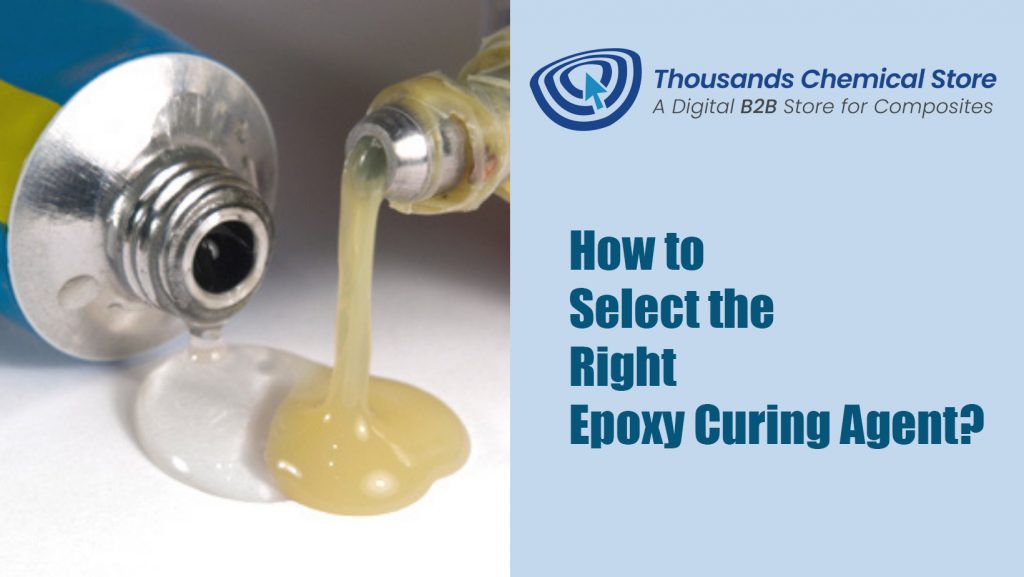
Thousands Chemicals, a leading digital B2B marketplace specializing in composite materials, offers a comprehensive platform designed to streamline the sourcing process and empower buyers with informed decision-making.
Key Considerations for Choosing an Epoxy Curing Agent
- Curing Profile: Evaluate the required curing time to align with your production schedules. Rapid-curing agents facilitate accelerated workflows, whereas slower-curing options are ideal for complex or large-scale processes.
- Compatibility: Ensure the curing agent is chemically and physically compatible with your epoxy resin to deliver the desired mechanical properties, electrical insulation, and chemical resistance.
- Operating Conditions: Select curing agents tailored to your processing environment, whether requiring low-temperature curing or high-temperature resistance.
- Health and Environmental Compliance: Prioritize low-VOC, non-toxic, and environmentally sustainable curing agents to comply with regulatory standards and safeguard workplace safety.
Advantages of Procuring via Thousands Chemicals
- Extensive Product Range: Access an expansive portfolio of chemical products, including diverse epoxy curing agents sourced from reputable manufacturers.
- Verified Suppliers & Authenticity: Partner with thoroughly vetted suppliers ensuring product authenticity, quality assurance, and traceability.
- Efficient Procurement Experience: Leverage advanced search and filtering tools designed to simplify product discovery, optimize purchasing cycles, and reduce operational costs.
- Dedicated After-Sales Support: Benefit from the platform’s full-cycle support backed by a 100% self-operated model, ensuring reliability and customer satisfaction.
Thousands Chemicals is committed to transforming the chemical procurement landscape by offering a secure, transparent, and intelligent platform tailored to industry needs. Whether for initial sourcing or strategic supply chain management, Thousands Chemicals is your trusted partner for epoxy curing agents and beyond.
Explore Thousands Chemicals today to elevate your chemical sourcing strategy.
Comparing Common Epoxy Curing Agent Types
| Curing Agent Type | Key Characteristics | Typical Applications |
| Aliphatic Amines | Fast cure at room temperature, moderate chemical resistance | General adhesives, coatings, potting compounds |
| Cycloaliphatic Amines | Better UV and weathering resistance than aliphatic amines | Outdoor coatings, flooring |
| Polyamides | Flexible cured film, good adhesion, lower toxicity | Flexible adhesives, primers |
| Anhydrides | Long pot life, high heat resistance, requires elevated cure temperature | Electrical insulation, encapsulation, aerospace composites |
Selection Guide
Start by defining your cure schedule (room temperature vs. heat cure), required pot life, and end-use performance targets such as chemical resistance, flexibility, or electrical properties. Amine-based curing agents suit fast room-temperature cures for general-purpose bonding and coating, while anhydride systems are preferred where high heat resistance and long working time are priorities, such as in electrical insulation and aerospace composites. Always confirm stoichiometric ratio and mix compatibility with your specific epoxy resin grade before scaling to production.
Packaging and Shipping
Epoxy curing agents are available in standard drums and IBC totes, with bulk supply options for large-volume buyers. We ship globally by sea and air freight, with COA and MSDS provided for every shipment. Contact us for current lead times and packaging options.
FAQ
What is the difference between amine and anhydride curing agents?
Amine curing agents generally cure faster at room temperature, while anhydride curing agents offer longer pot life and higher heat resistance but typically require elevated cure temperatures.
How do I determine the correct mix ratio for an epoxy curing agent?
Mix ratio depends on the stoichiometry of the specific resin and curing agent pair. Always follow the technical data sheet for your chosen products, and contact our technical team if you need help confirming the ratio for your formulation.
Which curing agent is best for outdoor or UV-exposed applications?
Cycloaliphatic amine curing agents generally offer better UV and weathering resistance than standard aliphatic amines, making them a common choice for outdoor coatings and flooring.
Do you provide COA and MSDS with curing agent shipments?
Yes, COA and MSDS documentation is provided with every shipment to support your quality control and regulatory compliance requirements.
Can you help match a curing agent to my specific epoxy resin grade?
Yes, our technical team can help match a curing agent to your resin system based on your cure schedule, performance targets, and application requirements. Contact us with your specifications for a recommendation.