



For formulators working with resin, gelcoat, and adhesive systems, the choice of fumed silica additive has a direct effect on sag resistance, pigment settling, and how consistently a batch behaves from one production run to the next. Getting the grade selection wrong can mean poor viscosity build, uneven thixotropy, or an additive that never fully disperses during mixing.
This article looks at how hydrophilic and hydrophobic grades differ, where each type fits into composite and coatings formulations, and what buyers should confirm when comparing options for a specific system.
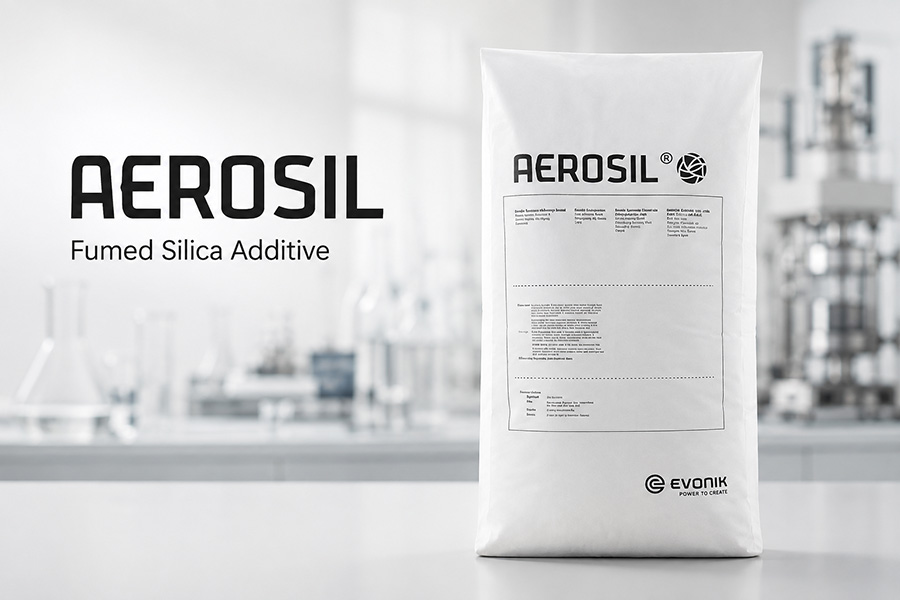
Why Fumed Silica Additive Choice Matters for Resin and Gelcoat Systems
These additives are used to build thixotropic structure into liquid resin, gelcoat, and adhesive systems, which helps control sag on vertical surfaces and keeps pigments or fillers from settling out during storage. Fumed silica is manufactured in both untreated and surface-treated forms, and the two families behave quite differently once they are mixed into a resin system, which is why grade selection is not simply a matter of picking whichever product is on hand.
Hydrophilic vs Hydrophobic Fumed Silica Grades
Hydrophilic Grades for Polar and Waterborne Systems
Untreated, hydrophilic grades such as AEROSIL 200 and AEROSIL 300 are commonly referenced for polar and waterborne systems, where the silica surface interacts readily with polar resin components to build viscosity and support anti-settling performance. These grades tend to be a starting point for formulators working with unsaturated polyester and similar polar resin chemistries.
Hydrophobically Treated Grades for Solvent-Based and Nonpolar Systems
Surface-treated grades such as AEROSIL R972, AEROSIL R812, and AEROSIL R202 are typically used in solvent-based, nonpolar, or more hydrophobic resin systems, where the treated surface improves compatibility and helps the material disperse more easily into the resin matrix. Formulators moving between polar and nonpolar resin bases often need to switch fumed silica additive families rather than simply adjusting the dosage of a single grade.
Selecting a Fumed Silica Additive for Your Application
Thixotropy and Anti-Sag Performance
For gelcoats and structural adhesives applied on vertical or overhead surfaces, formulators generally select a grade to build enough low-shear viscosity to prevent sagging, while still allowing the material to flow and level once shear is applied during spraying, brushing, or troweling.
Anti-Settling in Filled and Pigmented Systems
In pigmented gelcoats and filled resin systems, fumed silica helps keep pigment and filler particles suspended during storage and transport, reducing the need for extensive remixing before use and supporting more consistent color and performance batch to batch.
Processing Considerations for Fumed Silica Additive Use
Dispersing a fumed silica additive properly usually requires adequate shear during incorporation, since under-dispersed silica will not build the expected thixotropic structure, regardless of which grade is selected. Formulators comparing grades often evaluate rheological behavior using a rotational viscometer method such as ASTM D2196, which provides a consistent way to characterize shear-thinning and thixotropic response when trialing a new grade in a formulation. Dosage levels also vary by grade and target viscosity, so lab trials at a small scale before committing to a full batch are generally worthwhile.
Sourcing Fumed Silica Additive Grades for Composite Manufacturing
Buyers evaluating these options for resin, gelcoat, or adhesive formulations should request current technical data sheets to confirm surface treatment type, recommended dosage range, and compatibility with the specific resin chemistry in use before scaling from lab trial to full batch production. Coordinating this order alongside resin, gelcoat, or reinforcement materials from the same supplier can also help simplify logistics for a single project.
Frequently Asked Questions
What does a fumed silica additive do in resin and gelcoat systems?
It builds thixotropic structure in liquid resin, gelcoat, or adhesive systems, which helps control sag on vertical surfaces and keeps pigments or fillers suspended during storage.
What is the difference between hydrophilic and hydrophobic fumed silica grades?
Hydrophilic grades are untreated and generally used in polar or waterborne systems, while hydrophobically treated grades are surface-modified for better compatibility in solvent-based or nonpolar resin systems.
How do I know if a fumed silica additive is properly dispersed?
Proper dispersion typically requires adequate shear during mixing; under-dispersed silica will not build the expected viscosity or thixotropic behavior, which can be checked using a rotational viscometer method such as ASTM D2196.
Can these additives be used in both resin and adhesive formulations?
Yes, fumed silica is used across resin, gelcoat, and adhesive systems, with grade selection depending on the specific chemistry and application method involved.
What should I confirm before ordering a fumed silica additive?
Buyers should confirm the surface treatment type, recommended dosage range, and compatibility with their resin system by requesting the current technical data sheet for the specific grade.
ChemicalsStore.com provides sourcing support, technical documentation, and responsive customer service for buyers evaluating fumed silica additive grades alongside other resin, gelcoat, and auxiliary agent products.
Explore our product page: AEROSIL 300
You may also be interested in: AEROSIL 380, AEROSIL R 812, our Auxiliary Agent catalog, and the Evonik supplier page
Send us your target resin system and required thixotropic performance at info@chemicalsstore.com, and we’ll help you confirm stock and get a quote.