


Deawa DW 5213 is a solvent-based semi-permanent release agent formulated for multiple demolding cycles with high surface gloss and no transfer onto the finished part. For composite mold operators sourcing a reliable release system, Deawa DW 5213 offers documented clean-release performance, low odor, and no residue buildup, based on the manufacturer’s published product information. This guide summarizes the verified characteristics, application procedure, and sourcing considerations buyers need before placing an order.
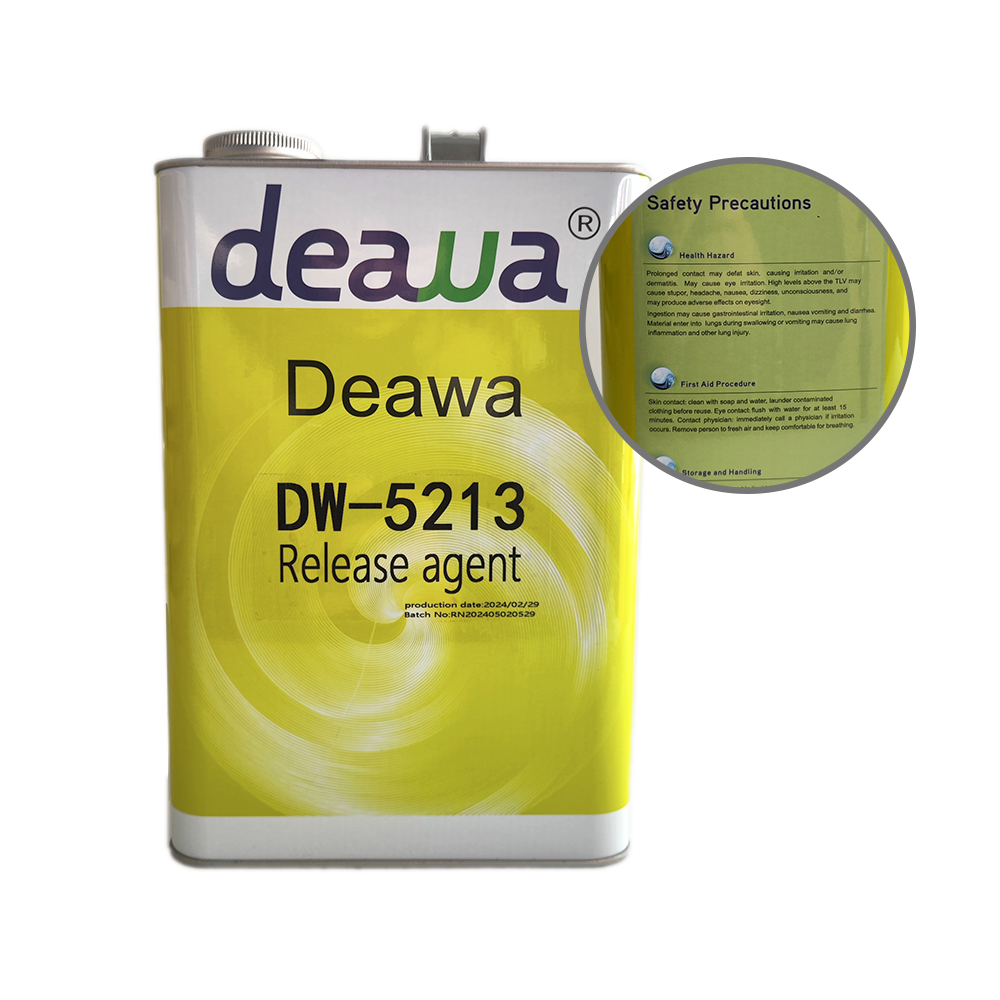
Deawa DW 5213 Characteristics
According to the manufacturer’s product documentation, this release agent is built around five core characteristics that matter most to mold operators running repeated demolding cycles.
- Easy release agent, supports multiple demolding cycles
- High surface gloss on the finished part
- No transfer onto the laminate surface
- No residue buildup on the mold
- Low odor during application
Material Physical and Chemical Properties
The following values are taken directly from the manufacturer’s published technical information. Buyers should request the current batch Safety Data Sheet to confirm values prior to large-volume ordering.
| Property | Value |
|---|---|
| Appearance | Clear liquid |
| Odor | Hydrocarbon |
| Solvent | Aliphatic hydrocarbons |
| Specific gravity | 0.760 ± 0.010 |
| Thermal stability after curing | 400°C |
Precautions
This product is sensitive to moisture, so the container lid should be tightly sealed when not in use. Buyers should also ensure good air circulation during application, consistent with standard solvent-based release agent handling practice.
Mold Preparation for Deawa DW 5213
For best results, this release agent should be applied on clean and dry molds. All waxes, sealants, scrubbers, and other release agent residues must be cleaned thoroughly before application. The manufacturer recommends using a compatible mold cleaner or other suitable cleaning solvent to prepare the mold surface beforehand.
Application Method
Refer to the product Safety Data Sheet before use. Deawa DW 5213 can be applied at room temperature using a clean, lint-free cloth. Nonwoven fabric should not be used, since the solvent in this release agent will dissolve the adhesive in nonwoven fabrics.
- Use a clean, lint-free cloth soaked with the release agent and apply it evenly and systematically to the mold surface, forming a smooth, wet film.
- Immediately use a clean, lint-free cloth to spread the film from the outside in.
- Do not work on the mold surface right after wiping; wait for the release agent to fully cure before proceeding with production.
- Generally, two layers or a thicker base coat are needed, with each layer requiring 5-10 minutes for the solvent to evaporate.
- The final layer needs 20 minutes to fully cure before starting production. The base coat should be dry and non-sticky.
A better release effect is ensured when every part of the mold surface has sufficient and even coverage of the release agent. If release difficulty occurs, operators can choose to reapply the product on the entire mold or only on the problematic areas, according to the manufacturer’s application guidance.
Sourcing Deawa DW 5213 for Your Project
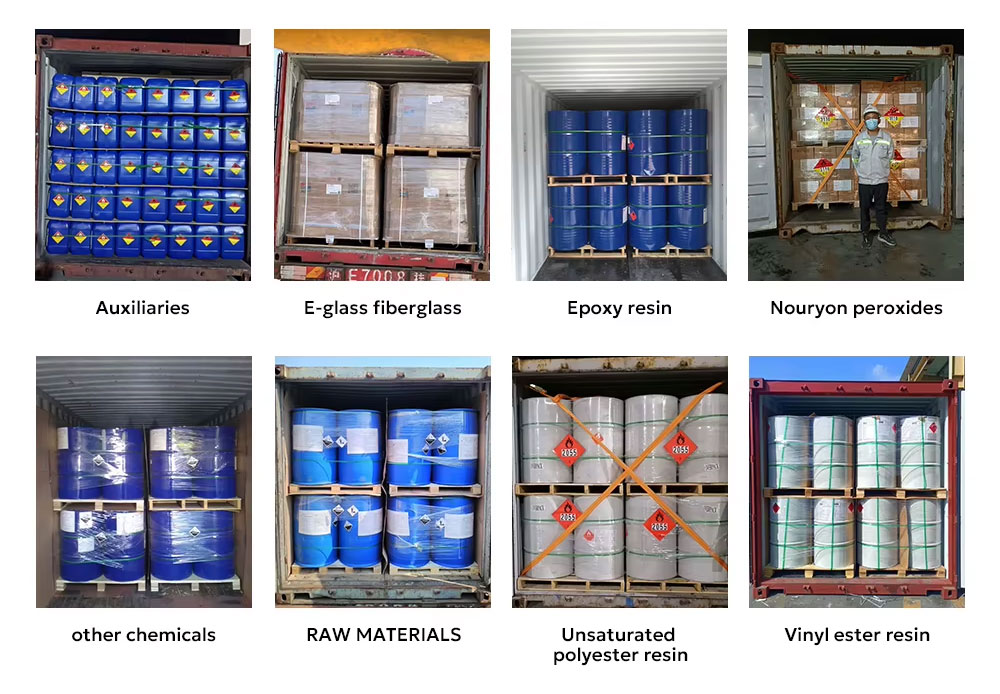
This release agent is one of the recommended international brand products available through our supply chain resource support for composite mold operators. A Safety Data Sheet for this product is available on request, and buyers formulating a demolding process around this release agent should always confirm the current batch documentation, packaging options, and compatible mold cleaner recommendations with their supplier before committing to volume orders.
For buyers comparing release systems and processing additives for composite mold work, our auxiliary agent product category lists additional release agents and mold-preparation products suited to a range of tooling needs. Resin systems commonly paired with release agents in mold-making applications are available through our unsaturated polyester and vinyl ester resin category. Buyers wanting background on composite mold-release test methodology can review the ASTM Committee D20 on Plastics resource page.
Frequently Asked Questions About Deawa DW 5213
What type of product is this?
It is a solvent-based semi-permanent release agent designed for multiple demolding cycles, with high surface gloss, no transfer, no residue, and low odor during application.
How should the mold be prepared before use?
The mold must be clean and dry, with all waxes, sealants, scrubbers, and prior release agent residues fully removed using a compatible mold cleaner or other suitable cleaning solvent.
Can I apply it with any type of cloth?
No. Only a clean, lint-free cloth should be used. Nonwoven fabric is not recommended because the product’s solvent will dissolve the adhesive used in nonwoven fabrics.
How many layers are typically needed?
Generally two layers or a thicker base coat are needed, with 5-10 minutes of solvent evaporation time per layer and a final 20-minute cure before production begins.
What should I do if release is difficult?
Operators can reapply Deawa DW 5213 either across the entire mold or only on the specific problem areas, according to the manufacturer’s application guidance.
Request a Quote for Deawa DW 5213
If your mold-release process calls for a documented semi-permanent release agent with high gloss and no transfer, contact our team with your mold type, laminate schedule, and order volume. We can confirm current lead times, packaging options, and technical documentation for Deawa DW 5213 and compatible mold-preparation products.