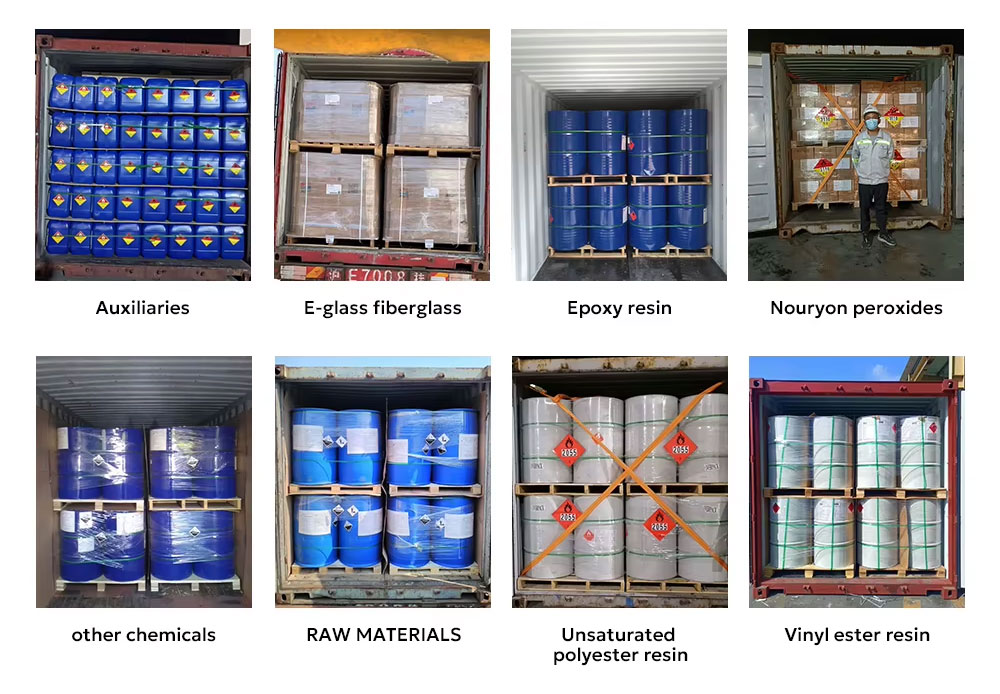



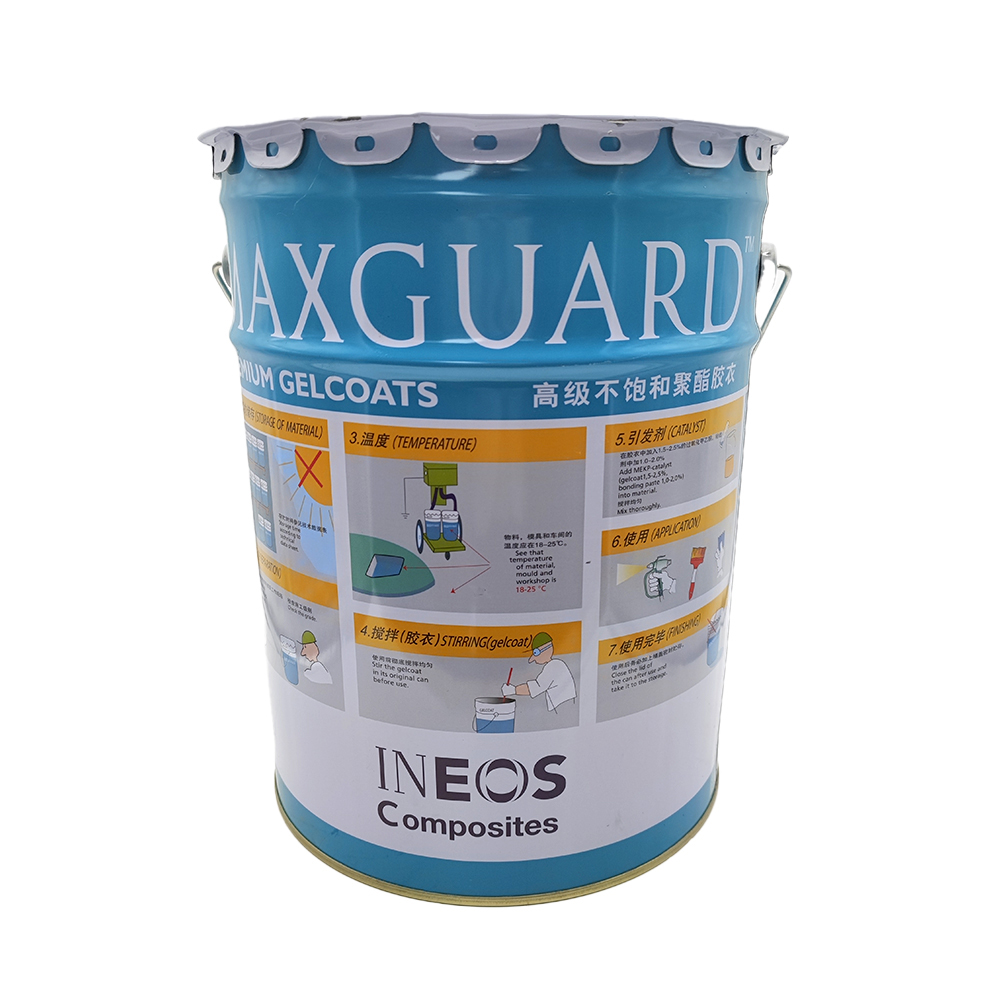
Maxguard GT 7540 is a tooling gelcoat recommended for the manufacture of various moldings. As one of the recommended international brand products in our auxiliary agent range, Maxguard GT 7540 is supplied with supply chain resource support for composite manufacturers building molds and tools for downstream FRP production.
Application and Use of Maxguard GT 7540
Maxguard GT 7540 is recommended for the manufacture of various moldings and is available in two grades to match different application methods.
- H grades are suitable for brushing
- S grades are suitable for spraying
Selecting the correct grade of Maxguard GT 7540 depends on the toolmaker’s existing equipment and the geometry of the mold being built. Brush application is typically favored for smaller molds, repair work, and tooling shops without spray equipment, while spray application is generally selected for larger tooling surfaces where consistent film build and faster coverage are priorities.
Why Tooling Gelcoats Matter for Mold Manufacturing
Tooling gelcoats such as Maxguard GT 7540 are formulated specifically for building molds and plugs used in FRP production, rather than for the finished parts produced from those molds.
Because a mold surface is reused repeatedly to cast or laminate many parts, tooling gelcoats are typically selected for surface hardness, dimensional stability, and resistance to repeated demolding cycles.
A production gelcoat, by contrast, is applied once per part and is generally optimized for cosmetic appearance rather than long-term wear. Toolmakers working with Maxguard GT 7540 should plan surface preparation, release agent compatibility, and post-cure schedules around the fact that the mold itself is the long-term asset, not a disposable surface.
Mold Release and Demolding Considerations
Consistent demolding performance over the life of a tool depends on compatible release agent systems and proper cure of the tooling gelcoat surface before the first production cycle. Composite manufacturers using Maxguard GT 7540 are encouraged to confirm release agent compatibility and post-cure requirements with their mold release agent supplier before starting a production run, since a correctly prepared tool surface helps protect the dimensional stability and surface finish that tooling gelcoats like Maxguard GT 7540 are selected for in the first place.
Sourcing this tooling gelcoat for FRP Tooling Projects
Tooling gelcoats play a supporting but important role in the overall cost and lead time of an FRP tooling project. Buyers planning new molds or plugs should confirm grade (H or S), pack size, and lead time with their supplier ahead of the tooling schedule, and align this material with other inputs such as resin systems and auxiliary agents used in the same build.
Industry guidance on composite tooling practices, including mold design and surface preparation, is available from organizations such as INEOS Composites, which publishes technical resources relevant to FRP toolmakers working with gelcoats and resin systems.
FAQ
What is the product used for?
It is a tooling gelcoat recommended for the manufacture of various moldings, used to build molds and tools rather than finished composite parts.
What is the difference between H and S grades?
H grades are formulated for brushing application, while S grades are formulated for spraying application, allowing toolmakers to select the grade that matches their equipment and the tool being built.
Why use a tooling gelcoat instead of a production gelcoat?
Tooling gelcoats are formulated for mold and plug surfaces that are reused across many production cycles, so they are typically selected for surface hardness and dimensional stability rather than the cosmetic finish properties prioritized in production gelcoats.
Does the release agent matter when using this grade?
Yes. Consistent demolding over the life of a tool depends on compatible release agent systems and a properly cured tooling gelcoat surface, so confirming release agent compatibility before production is recommended.
Can you provide technical documentation and bulk pricing for it?
Yes, technical data sheets and SDS documentation are available on request, and our team can provide bulk pricing and lead times for this tooling gelcoat once we understand your target application and order volume.
Interested in the product for your next tooling project? Contact our team for technical data sheets, SDS documentation, and a quote tailored to your grade (H or S), pack size, and order volume.