


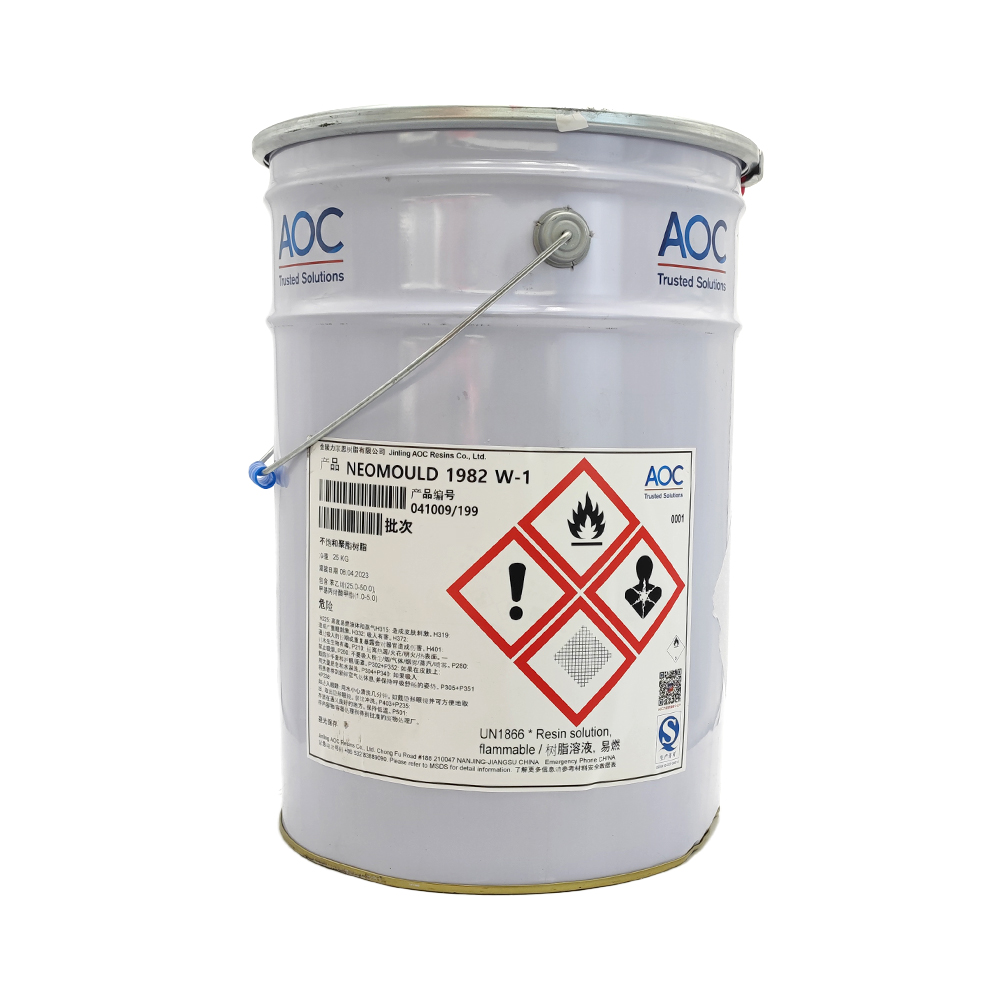
Neomould 1982-W-1 is a low-volatility, filled, pre-accelerated, styrene-soluble unsaturated polyester resin characterized by low reactivity and low viscosity, which cures without shrinkage. For composite buyers sourcing a dedicated mold-making resin, Neomould 1982-W-1 offers a documented combination of rapid thin-layer curing, low exothermic reaction, and zero shrinkage, based on the manufacturer’s published technical data sheet. This guide summarizes the verified specifications, processing guidance, and sourcing considerations buyers need before placing an order.
What Is Neomould 1982-W-1?
This resin cures rapidly in thin layers and, with its low exothermic reaction and zero shrinkage, is purpose-built for mold manufacturing. The special formulation makes it easy to work with, ensures rapid wetting of glass fiber, and prevents sagging during application. The resin’s color also makes it easier to detect air bubbles in the laminate. After curing, it is not tacky and does not affect the adhesion of subsequent laminate layers.
The maximum layer thickness per application is 5 mm, and two layers are sufficient to achieve the thickness required for standard molds, according to the manufacturer’s technical documentation.
Neomould 1982-W-1 Key Benefits for Mold Builders
- Zero shrinkage on cure, suited to precision mold tooling
- Low exothermic reaction and rapid cure in thin layers
- Rapid wetting of glass fiber reinforcement
- Resists sagging during vertical or overhead application
- Non-tacky cured surface that does not interfere with subsequent laminate adhesion
Neomould 1982-W-1 Product Specification
The following values are taken directly from the manufacturer’s published technical data sheet for this grade. Buyers should request the current batch Certificate of Analysis to confirm values prior to large-volume ordering.
| Property | Value | Unit | Test Method |
|---|---|---|---|
| Appearance | Turbidity | – | TM 2265 |
| Viscosity @23°C, Z2, 2 s⁻¹ | 620-680 | mPa.s | TM 2013 |
| Viscosity @23°C, Z2, 50 s⁻¹ | 590-630 | mPa.s | TM 2013 |
| Viscosity @23°C, Z2, 250 s⁻¹ | 530-560 | mPa.s | TM 2013 |
| Solid content | 68-71 | % | TM 2013 |
| Gel time @25-35°C | 38-42 | min | TM 2033 |
| Curing time @25°C, exothermic peak | 46-56 | min | TM 2625 |
| Exothermic peak | 110-120 | °C | TM 2625 |
Reactivity measurement for the gel-time and curing-time values above is based on 2.0 g of M50 (Akzo Nobel) added to 100 g of resin at 25°C.
Liquid Resin Typical Properties
| Property | Value | Unit | Test Method |
|---|---|---|---|
| Flash point | 34 | °C | TM 2800 |
Shelf life at 25°C, uninitiated and stored in the dark, is also documented on the manufacturer’s data sheet under TM 2800; buyers should confirm the current stated shelf-life period with their supplier when ordering, since this figure is formulation- and batch-dependent.
Typical Values for Chopped-Fiber Reinforced Felt
| Property | Value | Unit | Test Method |
|---|---|---|---|
| Tensile strength | 47 | MPa | ISO 527-2 |
| Tensile modulus | 4700 | MPa | ISO 527-2 |
| Elongation at break | 1.8 | % | ISO 527-2 |
| Flexural strength | 62 | MPa | ISO 178 |
| Flexural modulus | 4000 | MPa | ISO 178 |
| Heat Deflection Temperature | 100 | °C | ISO 75-A |
These chopped-fiber reinforced felt values were generated using 2% M50, cured at room temperature for 24 hours followed by 16 hours at 60°C. Actual laminate performance will vary with reinforcement type, glass content, and lay-up quality, so buyers building production molds should confirm expected performance with their own process qualification.
Processing Guidance
Because this resin cures rapidly in thin layers with a low exothermic reaction, mold builders can apply it in controlled coats without the heat buildup risk common to standard tooling resins. The maximum recommended layer thickness is 5 mm per application, and two layers are typically sufficient to build up standard mold wall thickness. Its resistance to sagging makes it suitable for vertical and overhead mold surfaces, and its distinct color helps technicians visually confirm the laminate is free of trapped air bubbles before proceeding to the next layer.
Sourcing Neomould 1982-W-1 for Your Project
This resin grade is one of the recommended international brand products available through our supply chain resource support for composite mold builders. A Material Safety Data Sheet for this product is available on request, and buyers formulating with this grade should always confirm the current batch data sheet, SDS, and shelf-life documentation with their supplier before committing to volume orders. Chemicalsstore.com provides sourcing support for buyers who need consistent access to mold resin alongside compatible curing agents, glass reinforcement, and release agents for a single tooling project.
For buyers comparing resin chemistries across mold-making and structural FRP applications, our unsaturated polyester and vinyl ester resin category lists additional grades suited to hand lay-up, spray-up, and tooling processes. Peroxide curing systems compatible with this resin, including M50-type MEKP grades, are available through our organic peroxide product line. Buyers wanting background on composite test methodology referenced by the ISO standards cited above can review the ASTM Committee D20 on Plastics resource page.
Frequently Asked Questions About Neomould 1982-W-1
What type of resin is this product?
It is a low-volatility, filled, pre-accelerated, styrene-soluble unsaturated polyester resin with low reactivity and low viscosity, formulated to cure without shrinkage.
What applications is it recommended for?
It is purpose-built for mold manufacturing, where zero shrinkage, low exothermic cure, and rapid thin-layer application are important for producing accurate, stable tooling surfaces.
How thick a layer can I apply at once?
The maximum layer thickness per application is 5 mm, and two layers are typically sufficient to achieve the thickness required for standard molds, per the manufacturer’s data sheet.
What curing agent and dosage should I use?
The manufacturer’s reactivity measurement is based on 2.0 g of M50 (Akzo Nobel) added to 100 g of resin at 25°C, with cured chopped-fiber felt properties generated using 2% M50 cured at room temperature for 24 hours followed by 16 hours at 60°C.
Does curing leave a tacky surface?
No. After curing, Neomould 1982-W-1 is not tacky and does not affect the adhesion of subsequent laminate layers, according to the manufacturer’s technical documentation.
Request a Quote for Neomould 1982-W-1
If your project calls for a zero-shrinkage mold resin with documented low-exotherm, thin-layer cure performance, contact our team with your target mold dimensions, laminate schedule, and order volume. We can confirm current lead times, packaging options, and technical documentation for Neomould 1982-W-1 and compatible curing systems.