


Palatal P 92I-910M is an AOC isophthalic neopentyl glycol unsaturated polyester resin for light-cured trenchless pipeline repair. The manufacturer identifies glass-fiber reinforced prepregs for sewer rehabilitation as a particular use. The PDS describes controllable thickening and processing time, rapid glass-fiber impregnation and dimensional predictability. Evaluate the resin as part of the complete liner and curing system for the intended repair project.
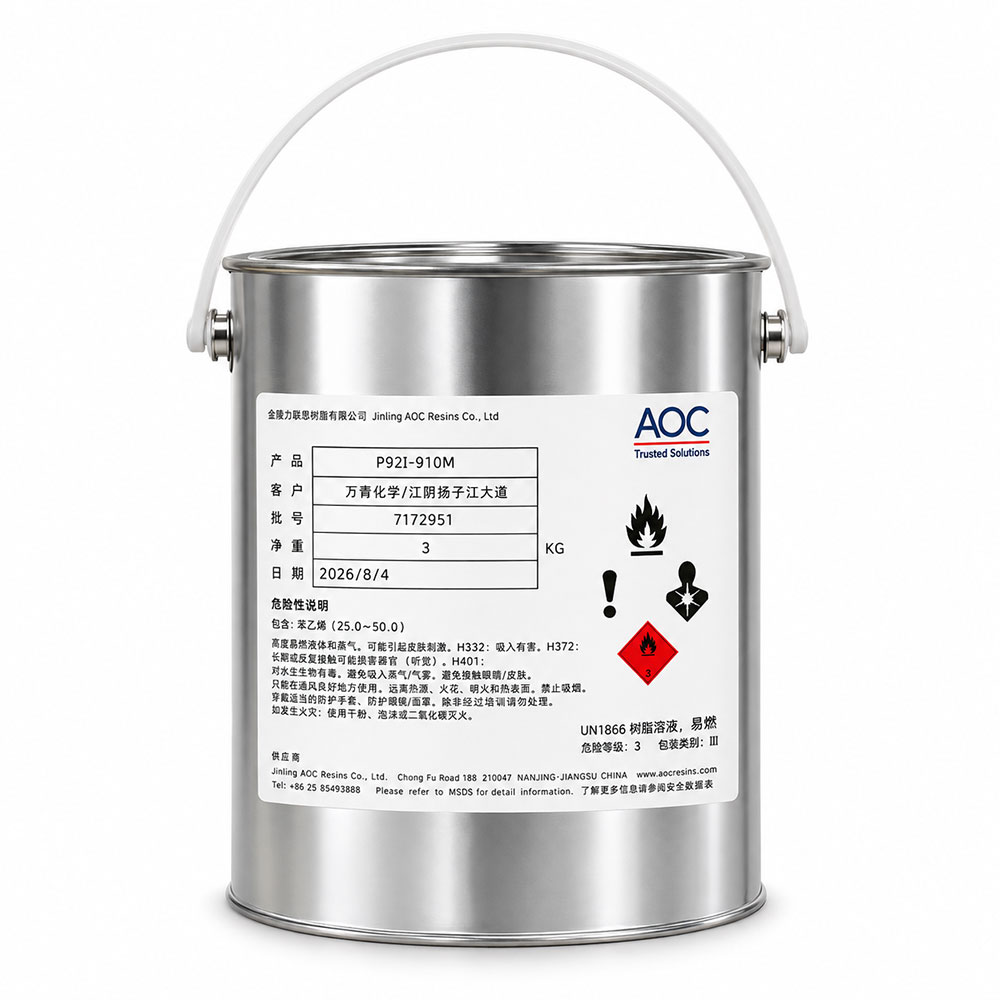
Palatal P 92I-910M Product Specifications
| Property | Value | Test method |
|---|---|---|
| Appearance | Clear to slightly cloudy | TM 2265 |
| Solids content, infrared drying | 53–58% | TM 2033 |
| Viscosity at 23 °C | 550–650 mPa·s | TM 2013 |
| Laboratory gel time, 25 to 35 °C | 4.5–8 min | TM 2500 |
For Palatal P 92I-910M, the viscosity measurement uses S2 at a shear rate of 100 s⁻¹ and 23 °C. The reactivity result was determined with a 300 W Osram UV test lamp. Treat the published gel time as a result under that laboratory setup. Confirm the liner-specific curing schedule with the technical team for the intended equipment and field conditions.
Typical Cast Resin Properties of Palatal P 92I-910M
| Property | Value | Test method |
|---|---|---|
| Tensile strength | 79 MPa | ISO 527-2 |
| Tensile modulus | 3.6 GPa | ISO 527-2 |
| Elongation at break | 5.3% | ISO 527-2 |
| Flexural strength | 130 MPa | ISO 178 |
| Flexural modulus | 3.2 GPa | ISO 178 |
| Heat deflection temperature | 91 °C | ISO 75-2 |
| Glass transition temperature | 136 °C | ISO 6721-2 |
The PDS identifies a separate chemical cure system for these cast specimens, followed by 24 hours of post-cure at 100 °C. This preparation differs from the UV lamp reactivity test. When designing a reinforced liner, request laminate data for its actual reinforcement and cure history and qualify the finished system against the project requirements.
Palatal P 92I-910M for Glass-Fiber Prepreg Liners
The manufacturer describes the resin for glass-fiber reinforced prepregs suitable for repairing sewer pipes. Identify the pipe geometry, laminate construction and planned installation sequence when discussing a trial. Include the expected service environment and any project-specific acceptance tests so the technical team can assess the intended use.
The processing section discusses UV curing at wavelengths of 365–420 nm, alongside conventional curing options. Ask for current guidance for the exact resin system, equipment and liner. Document the conditions used in qualification and confirm how cure will be assessed across the finished liner, including areas with limited light exposure.
4 Checks Before Ordering Palatal P 92I-910M
1. Match the full grade and documents. Specify the complete Palatal P 92I-910M name on enquiries and purchase records. Similar P 92I grades have different viscosity and reactivity values. Request documentation for the exact suffix supplied and confirm the current revision at quotation.
2. Define the liner and process. Provide the reinforcement, thickness, geometry and proposed light-curing equipment. Include the impregnation, storage and installation constraints that the trial should represent. Keep the accepted process record with the project specification.
3. Compare equivalent measurements. Check viscosity under the same temperature and shear conditions. For mechanical comparison, identify whether the specimen is unfilled resin or reinforced laminate. Record the applicable cure preparation before using a published value for a design comparison.
4. Confirm receiving and delivery requirements. Specify quantity, destination and delivery date. Ask for the available package sizes, lot information and remaining shelf life. Where a certificate of analysis is required, agree on its tests and units before placing the order.
Palatal P 92I-910M Supplier and TDS Requests
When contacting a Palatal P 92I-910M supplier, give the full AOC grade designation and the intended CIPP or relining application. Request the current Palatal P 92I-910M TDS and SDS before arranging a production trial. For repeat orders, include the previous purchase reference and lot number so the supplier can match the approved grade and documentation.
The supplied PDS lists six months of typical stability in dark storage at 25 °C. Confirm the remaining shelf life of the offered batch and follow the current product label and SDS for handling, storage and transport. Record the lot used for any approved liner sample and retain that record with the qualification results.
Explore the AOC resin range and the manufacturer’s product brand overview for related materials. Values here come from the supplied Chinese PDS. Its footer identifies version 1.0 dated 2 August 2020. Obtain the current manufacturer revision before agreeing on a purchase or project specification.