



Vinyl ester resin is one of the most widely used high-performance resins in the composite materials industry. Known for its excellent chemical resistance and mechanical durability, this resin bridges the gap between general-purpose polyester resins and high-performance epoxy systems. Because of its unique performance balance, vinyl ester resin has become the preferred material for applications exposed to corrosion, moisture, or continuous mechanical stress.
This guide provides a deep explanation of what vinyl ester resin is, how it is made, its key performance advantages, and where it is typically used in modern industries.
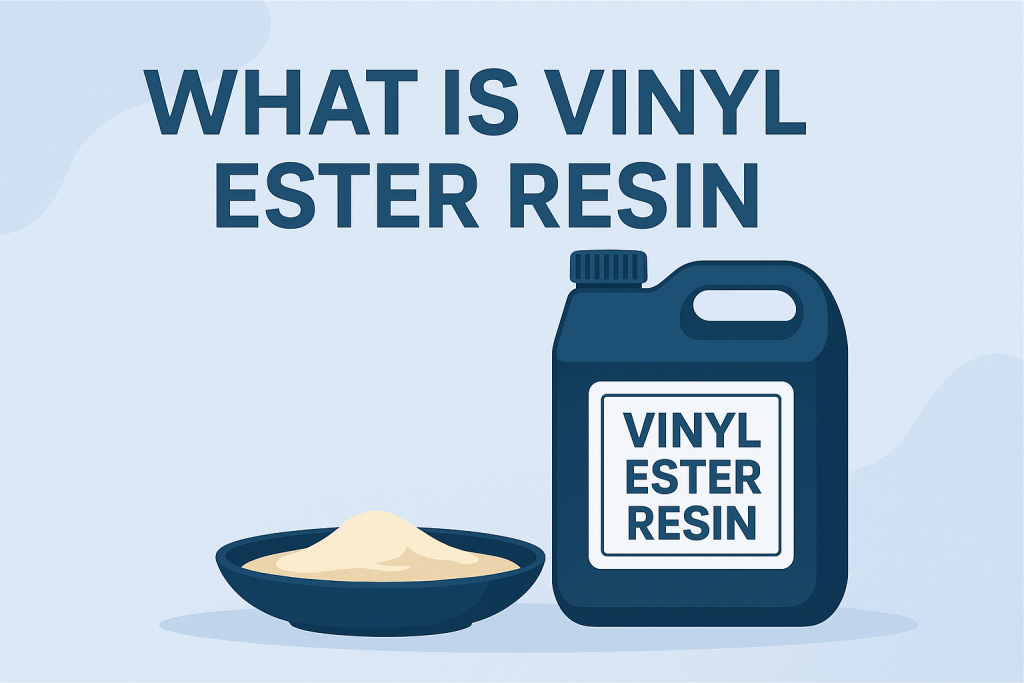
What Is Vinyl Ester Resin?
Vinyl ester resin is a thermosetting resin produced through the reaction of epoxy resin and unsaturated carboxylic acids, usually methacrylic or acrylic acid. This reaction modifies the epoxy chain and introduces unsaturated sites that allow curing through free-radical polymerization.
The resulting resin combines:
- The toughness and strong bonding characteristics of epoxy
- The fast curing and ease of processing found in polyester resins
Vinyl ester resin is typically supplied as a viscous liquid diluted with styrene or other reactive monomers, allowing it to cure at room temperature when mixed with peroxide catalysts.
How Vinyl Ester Resin Is Made (Detailed Chemistry Overview)
To understand why vinyl ester resin performs so well, it helps to look at its chemical origin:
- Base Epoxy Resin
The process begins with a standard bisphenol-A epoxy resin or novolac epoxy resin. These base epoxies offer high mechanical strength, heat resistance, and excellent adhesion. - Reaction With Carboxylic Acids
The epoxy is then reacted with methacrylic or acrylic acid. This reaction opens the epoxy rings and introduces vinyl groups (C=C), creating the characteristic “vinyl ester” structure. - Dissolution in Reactive Diluent
To control viscosity and enable curing, the resin is dissolved in styrene or alternative monomers. - Curing Through Free-Radical Polymerization
When combined with MEKP or another peroxide catalysts, the resin undergoes crosslinking, forming a strong, durable three-dimensional polymer network.
This structure explains why vinyl ester resins outperform polyester resins in many key areas.
Key Properties and Advantages of Vinyl Ester Resin
1)Superior Chemical Resistance
Vinyl ester resin is highly resistant to acids, alkalis, solvents, and oxidizing chemicals. This makes it ideal for corrosion-resistant FRP equipment.
2)Excellent Mechanical Strength
Its molecular structure provides:
- Higher tensile strength
- Better elongation
- Improved fracture toughness
compared to general-purpose polyester resin.
3)High Impact and Fatigue Resistance
Vinyl ester resin maintains mechanical performance even under repeated loading or long-term vibration, making it suitable for structural composites.
4)Low Water Absorption
This is a key reason the material is used extensively in marine and offshore industries.
5)Good Adhesion to Reinforcements
Vinyl ester resin bonds well with:
- Fiberglass
- Carbon fiber
- Aramid fiber
- Core materials in sandwich laminates
6)Wide Processing Compatibility
It works well with common composite manufacturing processes:
- Hand lay-up
- Spray-up
- Vacuum infusion
- Filament winding
- RTM / L-RTM
- Pultrusion
7)Faster Curing Than Epoxy
While epoxy resins can take hours to cure, vinyl ester resins often cure within minutes to an hour depending on formulation and catalyst level.
What Is Vinyl Ester Resin Used For?
Vinyl ester resin is found across multiple industrial sectors. Below are the most common applications:
1)Corrosion-Resistant Equipment
Vinyl ester resin is the top choice for FRP corrosion systems, used to manufacture:
- Chemical storage tanks
- Pipes and fittings
- Scrubbers & ducting
- Reaction vessels
- Pickling tanks
- Chlorination systems
Its chemical resistance allows long-term operation even in aggressive environments.
2)Marine and Offshore Structures
Vinyl ester resin is widely used for:
- Boat hulls
- Deck structures
- Jet ski components
- Underwater housings
- Offshore platforms
The resin resists blistering, water ingress, and hydrolysis better than polyester.
3)Wind Energy Components
For wind turbine blades, vinyl ester resin offers the balance of:
- Fatigue resistance
- Dimensional stability
- Good fiber bonding
It is commonly used in spar caps, shells, and structural laminates.
4)Transportation & Automotive Applications
Vinyl ester resin contributes to lightweight and high-strength composite parts such as:
- Battery enclosures
- Body panels
- Structural reinforcements
- Leaf springs
These benefits help reduce vehicle weight while improving performance.
5)Construction & Infrastructure
Vinyl ester-based FRP products are used for:
- Bridge decks
- FRP rebar
- Strengthening wraps for old structures
- Gratings and ladders
Its durability makes it suitable for long-term outdoor exposure.
6)Composite Molding and Consumer Products
Daily-use products manufactured with vinyl ester resin include:
- FRP panels
- Tooling and molds
- Protective coatings
- Industrial flooring systems
Its mechanical stability makes it ideal for molded composite components.
Vinyl Ester Resin vs. Polyester Resin vs. Epoxy Resin
| Property | Vinyl Ester | Polyester | Epoxy |
| Chemical resistance | High | Medium | High |
| Mechanical strength | High | Medium | Very high |
| Water absorption | Low | High | Very low |
| Cost | Medium | Low | High |
| Processing speed | Fast | Fast | Slow |
| Adhesion | Good | Moderate | Excellent |
| Typical use case | Corrosion, marine, structural | GP composites | High-end structural |
Vinyl ester resin sits right between polyester and epoxy, offering excellent performance at a moderate cost.
Where to Buy Vinyl Ester Resin
If you are sourcing vinyl ester resin for composite manufacturing, Thousands Chemicals offers a reliable and efficient way to purchase.
About Thousands Chemicals
Thousands of Chemicals — All in Thousands Chemicals
Thousands Chemicals is a digital B2B marketplace designed specifically for chemical and composite materials.
For Buyers
- Access hundreds of thousands of chemical products
- Purchase from verified and reputable suppliers
- Save time and reduce procurement cost
- Full authenticity guarantee and after-sales service
For Suppliers
- Reach new customers worldwide
- List products easily and gain industry feedback
- Benefit from a fully self-operated platform
Thousands Chemicals is a trusted platform for all types of resins, including vinyl ester resin, unsaturated polyester resin, epoxy resins, and composite additives.