




The composites industry has expanded steadily as manufacturers look for lightweight, durable, and corrosion-resistant solutions for applications in wind energy, marine structures, transportation, aerospace, and chemical processing. With increasing adoption of fiber-reinforced polymers—especially those based on epoxy, vinyl ester, and unsaturated polyester systems—the need for a more efficient and transparent sourcing model has become more evident.
Historically, buying raw materials for composites has required a slow and fragmented workflow. Engineers and procurement teams often spend days comparing technical data, confirming availability, requesting quotations, and verifying supplier credibility. Suppliers, on the other hand, struggle to reach new customers and differentiate their products in a crowded global market.
This is where the idea of a B2B store dedicated to composites brings meaningful change.
Why the Composites Sector Needs a Specialized B2B Marketplace
Composite manufacturing depends on a wide range of specialized materials: resins, hardeners, reinforcements, fillers, thixotropic agents, pigments, and processing additives. Each category requires strict technical matching, and small formulation differences can significantly impact product performance.
Because of this complexity, a general B2B marketplace cannot fully meet industry requirements. Composite manufacturers increasingly need:
1. Verified and trusted suppliers
Ensuring material authenticity and consistency is essential for safety, performance, and compliance.
2. Easy access to technical documentation
Engineers need fast comparisons of viscosity, gel time, curing profiles, mechanical properties, and chemical resistance across brands.
3. Transparent pricing and real-time availability
Shorter sourcing cycles reduce production delays and procurement costs.
4. A global yet industry-focused ecosystem
Composites are niche but geographically distributed; a specialized marketplace bridges this gap efficiently.
5. Digital procurement efficiency
Suppliers gain visibility, while buyers spend less time navigating traditional quotation workflows.
As composite materials continue to gain importance across industries, these needs are becoming foundational.
How Digital B2B Platforms Improve Composite Material Procurement
Specialized B2B platforms bring structural advantages to buyers and suppliers:
- Centralized catalogues of resins, additives, reinforcements, and chemicals
- Searchable technical attributes for fast comparison
- Direct buyer–supplier communication
- End-to-end transaction traceability
- Data insights for suppliers to understand demand
- Reduced procurement cycle time and total cost
These platforms support the broader digital transformation of the composites supply chain, strengthening global competitiveness.
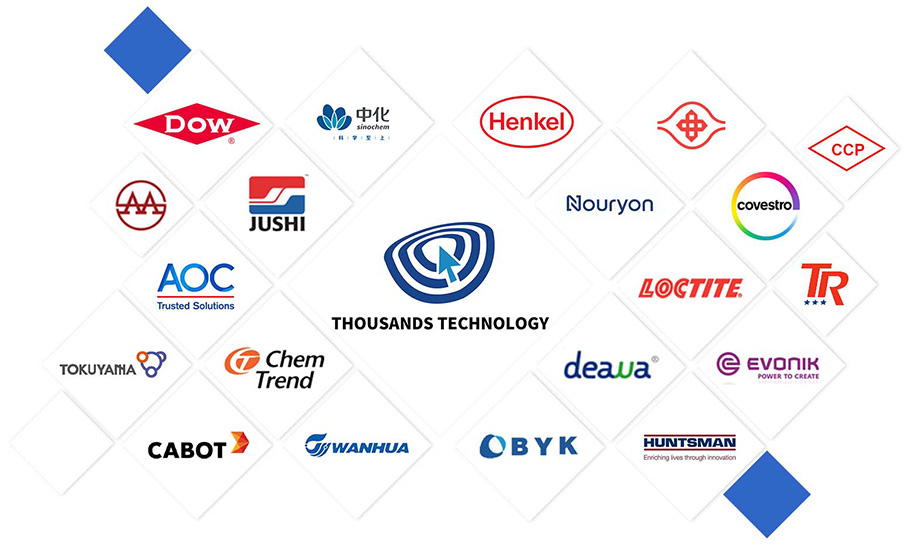
Thousands Technology: A Digital Marketplace Designed for Composite Materials
To meet these industry needs, Thousands Technology developed a modern B2B marketplace tailored specifically for composite materials and specialty chemicals.
For Buyers
- Access to a wide portfolio of chemical and composite raw materials
- Direct sourcing from vetted, reliable manufacturers
- Faster procurement cycles and improved price transparency
- A fully self-operated platform ensuring authenticity and after-sales protection
For Suppliers
- Immediate exposure to new international customers
- Enhanced product visibility and industry feedback
- A marketplace built exclusively for composites and chemicals
- Strong quality control and platform-backed support
As the composites supply chain continues shifting toward digital procurement, platforms like Thousands Technology are helping global manufacturers source smarter, operate more efficiently, and stay competitive in an evolving market.